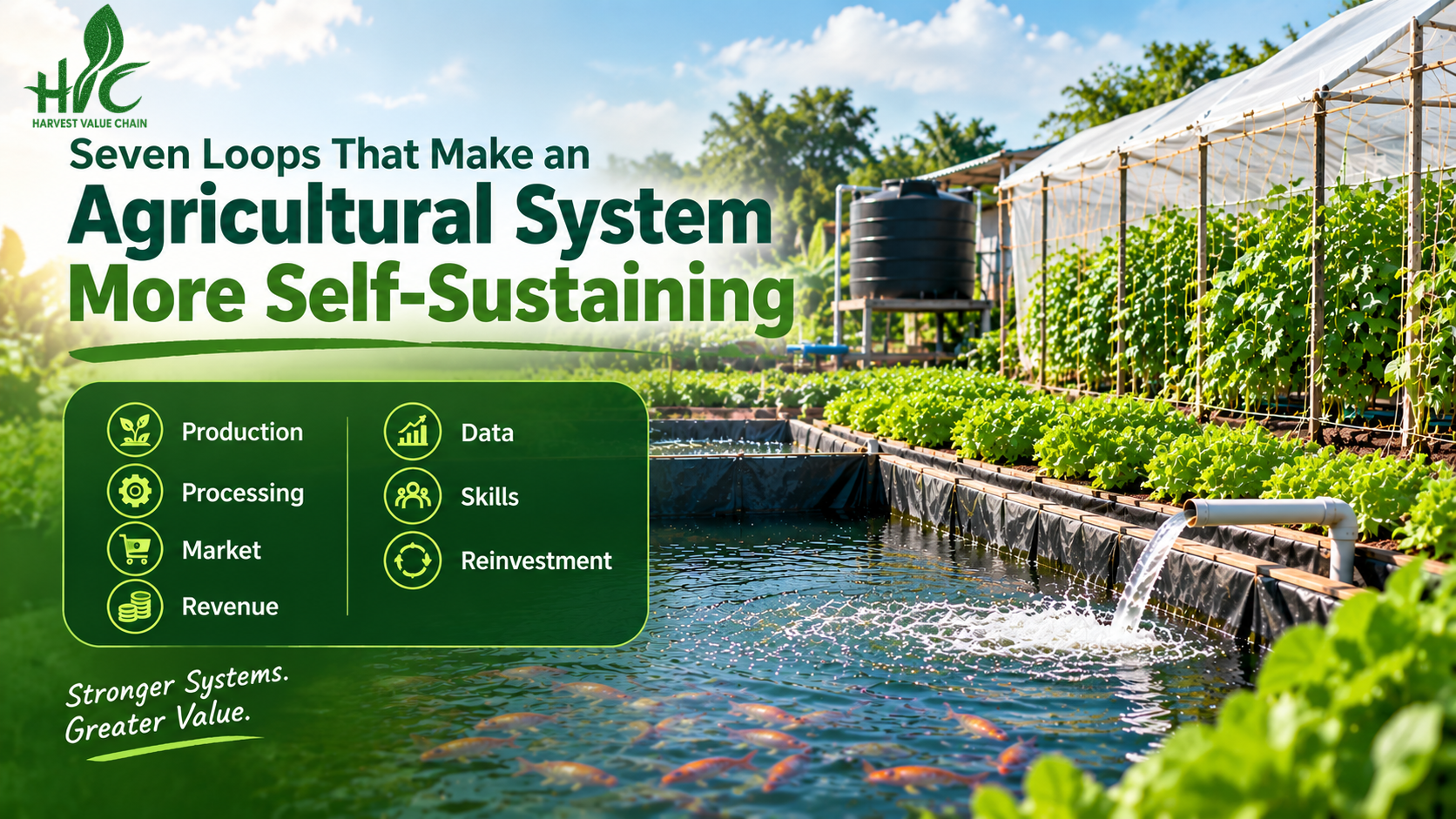
Agriculture does not operate in isolated steps.
A farmer produces. A processor adds value. A buyer creates demand. Logistics moves the product. Data helps everyone make better decisions. Skills improve how the system operates. Revenue creates the resources to keep everything moving.
When these parts are connected, agriculture becomes more than production. It becomes a system capable of creating and retaining value.
Here are seven connected loops that can make an agricultural system more self-sustaining;
1. Production
Production is the starting point, but it should not be viewed in isolation.
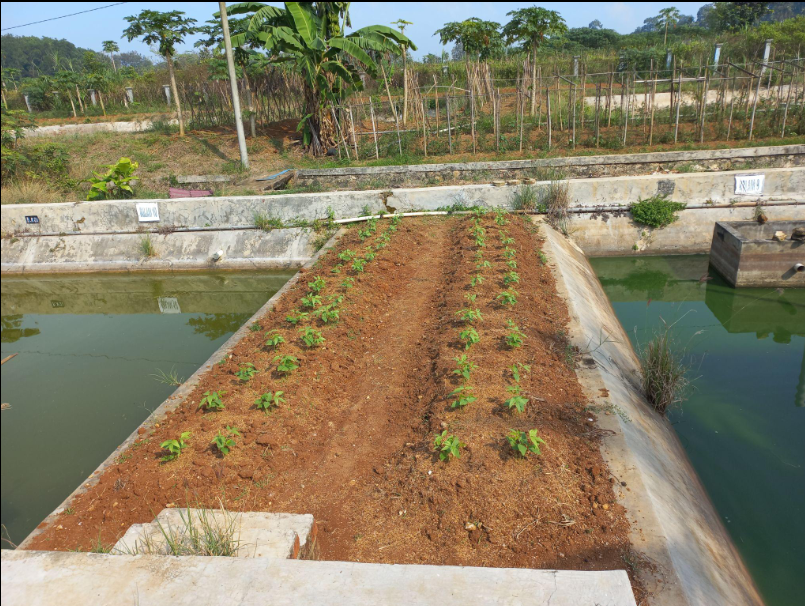
A more connected agricultural system looks at how different activities can support one another. For example, nutrient-rich water from fish production can be reused to support crop production, reducing waste while creating another productive link within the farm.
The goal is not simply to produce more.
It is to produce in a way that makes better use of available resources.
2. Processing
A harvest does not have to leave the farm or community as a raw commodity.
Processing creates opportunities to extend shelf life, reduce post-harvest losses and generate additional income from agricultural products.
Tomatoes can be processed before they spoil. Cassava can become gari or flour. Fish can be dried, smoked or processed into other products.
Even materials normally considered waste can have another use when the right processing systems exist.
This is where value addition turns agricultural output into broader economic opportunity.
3. Market
Producing a good product means little if it cannot reach the right buyer.
Farmers and processors need reliable connections to markets, while buyers need access to consistent suppliers.
Technology can help bridge this gap by connecting producers, processors and buyers, improving access to market information and making coordination easier.
A stronger agricultural system does not simply ask:
“What can we produce?”
It also asks:
“Who needs it, where are they, and how do we get it there?”
4. Revenue
Once products reach the market, revenue comes back into the system.
But revenue should not represent the end of the process.
Income generated from production and processing can support the next production cycle, improve infrastructure, maintain equipment, expand operations or create new opportunities.
This creates an important loop:
Production → Value addition → Market → Revenue → Better production.
The stronger this loop becomes, the less dependent the system is on constantly starting from scratch.
5. Data
Every agricultural system generates information.
What was produced?
How much was lost?
What did buyers need?
What prices were available?
Where did delays occur?
Which crops or products performed better?
Without this information, many decisions are based on assumptions.
With better data, farmers, processors and other actors can identify problems earlier, understand market demand and make more informed decisions.
Data therefore becomes part of the infrastructure of the agricultural system—not just an extra technology layer.
6. Skills
Technology cannot run an agricultural system by itself.
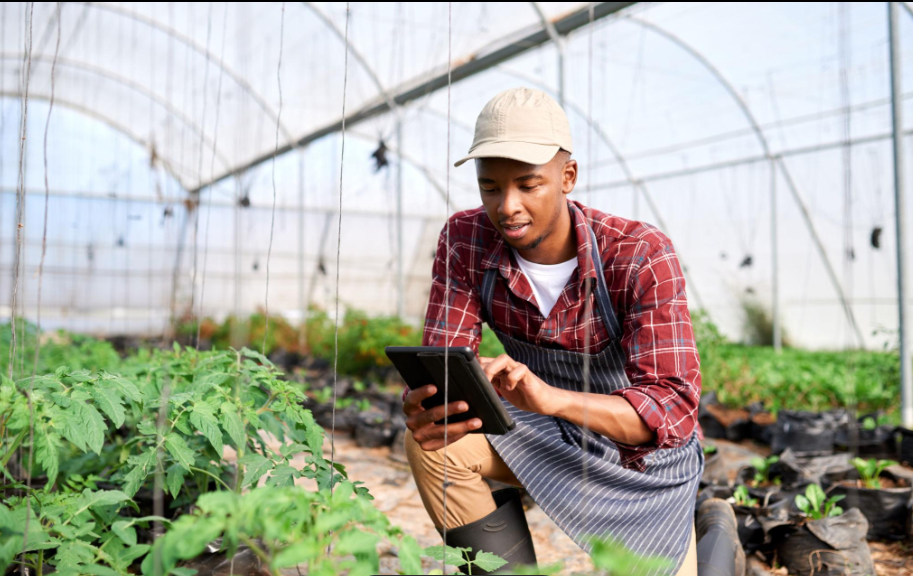
People need the knowledge to operate equipment, interpret information, manage production, process products and respond to changing market conditions.
That makes training and knowledge-sharing an important part of the cycle.
Farmers, processors, technicians, students and other agricultural actors need opportunities to develop practical skills that match the systems they are working within.
Better systems require capable people.
7. Reinvestment →
The final loop connects everything back to the beginning.
Revenue can improve production infrastructure.
Data can improve decision-making.
Training can improve operations.
Processing can create new products.
Market information can influence what gets produced next.
This is how the cycle keeps moving.
Instead of:
Produce → Sell → End
the system becomes:
Produce → Process → Market → Generate Revenue → Learn → Build Skills → Reinvest → Produce Better.
The Bigger Picture
A self-sustaining agricultural system is not created by one farm, one technology or one intervention.
It is built by connecting the different parts of the value chain so that production, processing, markets, information, logistics, skills and investment reinforce one another.
That is the shift from thinking about agriculture as a series of activities to thinking about it as a system.
And when the system works better, more value can remain within the agricultural community.