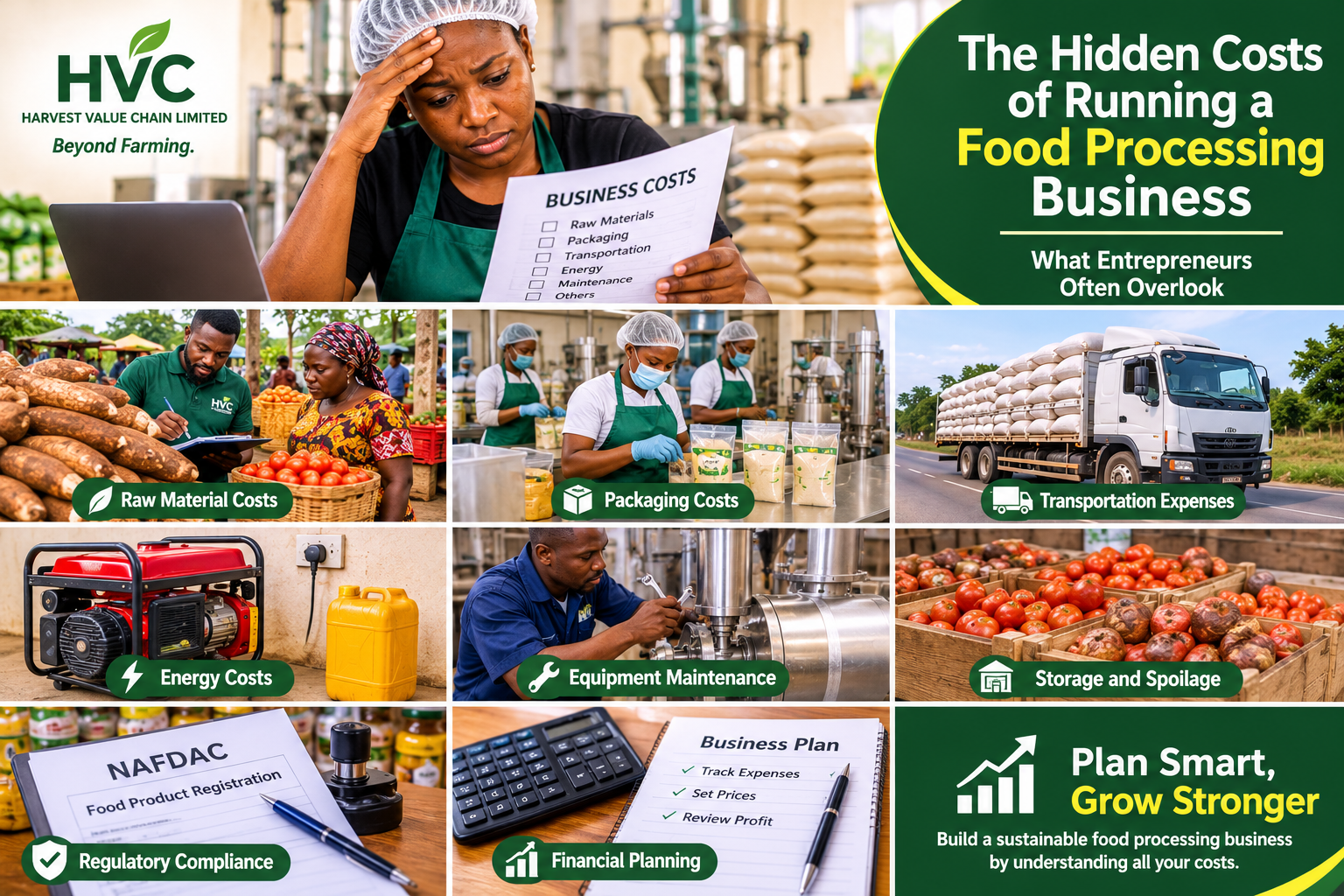
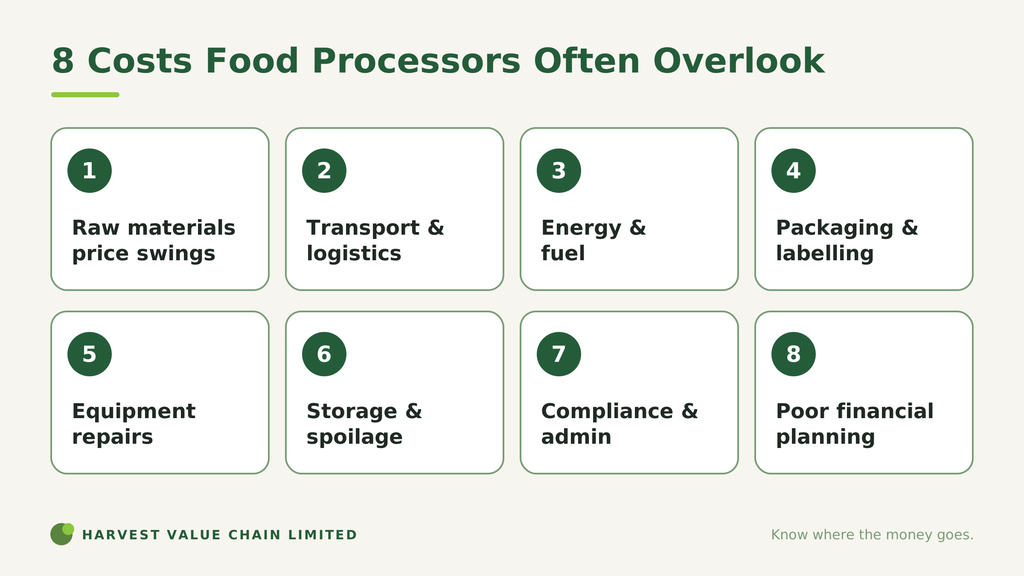
Running a food processing business involves much more than buying agricultural produce, processing it and selling the finished product. Behind every bottle of palm oil, pack of garri, bag of flour or carton of packaged snacks are several expenses that determine whether the business makes a profit or struggles to stay afloat.
For many food entrepreneurs, the first things that come to mind when calculating business costs are raw materials, labour and packaging. However, other expenses often go unnoticed until they begin to affect the business financially. Consider a small business owner who purchases cassava, processes it into garri, packages it and sells it to customers. After making several sales, the entrepreneur may feel that the business is doing well.
But what happens when the cost of transporting cassava increases, the processing machine needs repairs, electricity becomes unreliable or packaging materials become more expensive?
These expenses may appear small individually, but when combined, they can significantly reduce the money left after sales. Understanding these hidden costs is essential for anyone looking to build a sustainable food processing business
1. The Rising Cost of Raw Materials
Raw materials are often the largest expense in food processing. However, their prices are not always stable. A food processor who depends on tomatoes, cassava, maize, pepper or palm fruits may experience changes in purchase prices depending on the season, availability, weather conditions and transportation costs.
For example, a tomato processor may purchase tomatoes at a relatively affordable price during periods of high supply but struggle to maintain the same production cost when supply reduces. These fluctuations can make business planning difficult, especially when products are sold at fixed prices.
What can entrepreneurs do?
Businesses should monitor changes in raw material prices and maintain relationships with reliable farmers and suppliers. Where possible, they can explore seasonal purchasing and appropriate storage options to reduce the effects of price fluctuations. Planning purchases around seasonal availability can also help businesses make better decisions about production.
2. Transportation and Logistics Expenses
Getting agricultural produce from farms to processing centres is not always straightforward. A business may find a supplier offering affordable cassava or maize, but the cost of transporting the produce to the processing location could reduce the expected savings.
Transportation expenses also extend beyond moving raw materials. Finished products must be transported to warehouses, distributors, retailers and customers. For businesses handling perishable produce, delays during transportation can create additional challenges, including spoilage and quality deterioration.
What can entrepreneurs do?
Before purchasing raw materials, businesses should consider the full cost of getting them to their processing facilities. Comparing suppliers based on both product prices and delivery costs can help prevent unnecessary expenses.
Proper delivery planning, efficient route arrangements and working with dependable transport providers can also improve logistics management.
3. Electricity, Fuel and Other Energy Costs
Food processing often depends on machinery and equipment that require electricity or fuel. Depending on the type of business, energy may be needed for grinding, drying, milling, refrigeration, packaging and storage. In Nigeria, unreliable electricity supply means that some food processors have to depend on generators or alternative energy sources to maintain production.
The cost of petrol, diesel, generator maintenance and electricity can therefore become a significant part of operating expenses. For example, a small business producing packaged fruit juice may need continuous refrigeration to maintain product quality. When electricity supply is inconsistent, the business may spend additional money on fuel to keep its equipment running.
What can entrepreneurs do?
Food processors should monitor how much energy different stages of production consume. Maintaining equipment, avoiding unnecessary machine operation and exploring energy-efficient alternatives can help reduce costs over time. The goal is not simply to spend less on energy but to find more efficient ways of maintaining production without compromising product quality.
4. Packaging and Labelling Costs
Packaging is an important part of presenting food products to customers. However, its cost goes beyond purchasing bottles, nylon, cartons, labels and containers. Businesses must also consider printing, sealing, packaging equipment, storage and the possibility of damaged or rejected packaging materials. A small food business may initially purchase packaging materials in small quantities because of limited capital.
Although this may seem manageable, the cost per unit can be higher compared with purchasing larger quantities. There is also the cost of redesigning labels or changing packaging when a product expands into new markets or needs to meet additional regulatory requirements.
What can entrepreneurs do?
Entrepreneurs should compare packaging suppliers, consider the durability and suitability of different materials and plan purchases based on realistic production needs. It is also important to avoid choosing packaging based on appearance alone. Packaging should protect the product, communicate necessary information and be suitable for its intended market.
5. Equipment Maintenance and Unexpected Repairs
Food processing equipment is an investment, but owning machinery does not mean it will operate without additional costs. Grinding machines, milling equipment, dryers, refrigerators, sealing machines and other processing tools require regular maintenance. When equipment breaks down unexpectedly, businesses may face repair expenses, production delays and missed delivery deadlines.
For instance, a cassava processor whose grinding machine stops working during a period of high demand may have to pay for urgent repairs or outsource the processing work. These unexpected expenses can affect both cash flow and customer relationships.
What can entrepreneurs do?
Regular equipment maintenance should be included in the business budget. Entrepreneurs should also keep basic maintenance records and set aside funds for repairs and replacement of essential equipment. Preventive maintenance is generally more manageable than waiting until a machine develops a major fault.
6. Storage, Spoilage and Product Losses
Not every product that enters a processing facility eventually becomes a product that can be sold. Some agricultural produce may arrive damaged, while others may deteriorate because of poor storage conditions or delays in processing. Even after processing, finished products can lose quality if they are not stored under appropriate conditions.
This is particularly important for businesses handling fresh produce, dairy products, fruits, vegetables and other perishable foods. Imagine purchasing a large quantity of fresh tomatoes at a good price but lacking adequate storage or processing capacity. If some of the tomatoes spoil before they can be processed, the business loses part of its investment.
This is why storage should not be treated as an expense that comes after production. It is part of the entire processing operation.
What can entrepreneurs do?
Businesses should match their purchasing quantities with their actual processing capacity and available storage facilities. Proper inventory management, suitable storage conditions and timely processing can help reduce avoidable losses.
7. Regulatory Compliance and Business Administration
As food businesses grow, they may need to meet additional regulatory and administrative requirements. Depending on the product and business operations, expenses may include applicable product registration, laboratory testing, quality assurance, documentation, business permits and other compliance-related costs.
For food products in Nigeria, entrepreneurs should understand the relevant requirements of the National Agency for Food and Drug Administration and Control (NAFDAC), including applicable product registration and labelling requirements.
There are also administrative expenses that businesses sometimes overlook, such as record keeping, communication, accounting and staff training. Although these activities may not directly produce food products, they are important for building a properly managed business.
What can entrepreneurs do?
Rather than waiting until they want to expand into larger markets, food entrepreneurs should understand the regulatory requirements that apply to their products from the beginning. They should also maintain proper financial and production records to make it easier to monitor business performance and plan for growth.
8. The Cost of Poor Financial Planning
Perhaps one of the most overlooked challenges in food processing is failing to account for all business expenses when setting product prices. An entrepreneur may calculate the cost of raw materials, packaging and labour before deciding how much to charge customers.
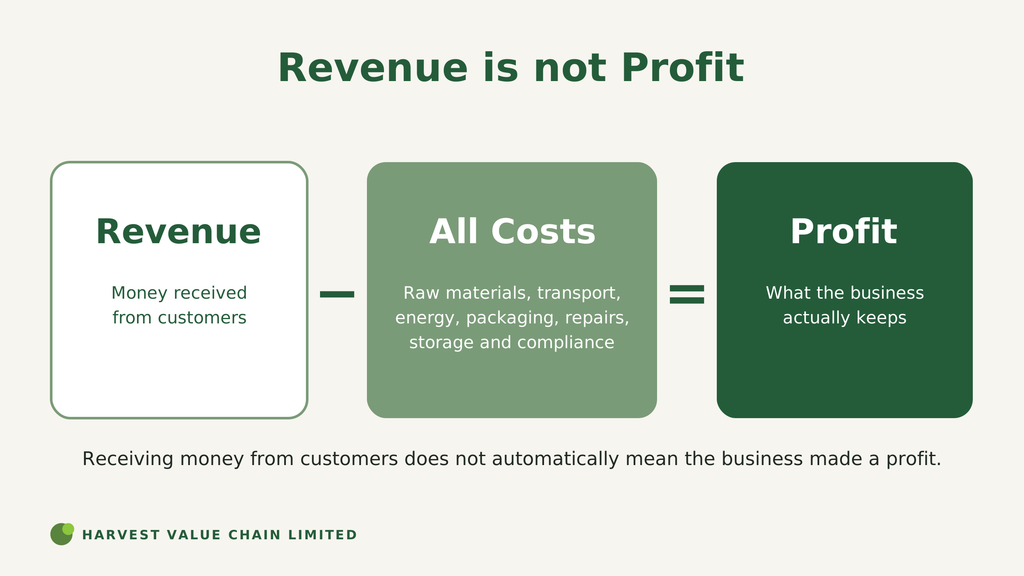
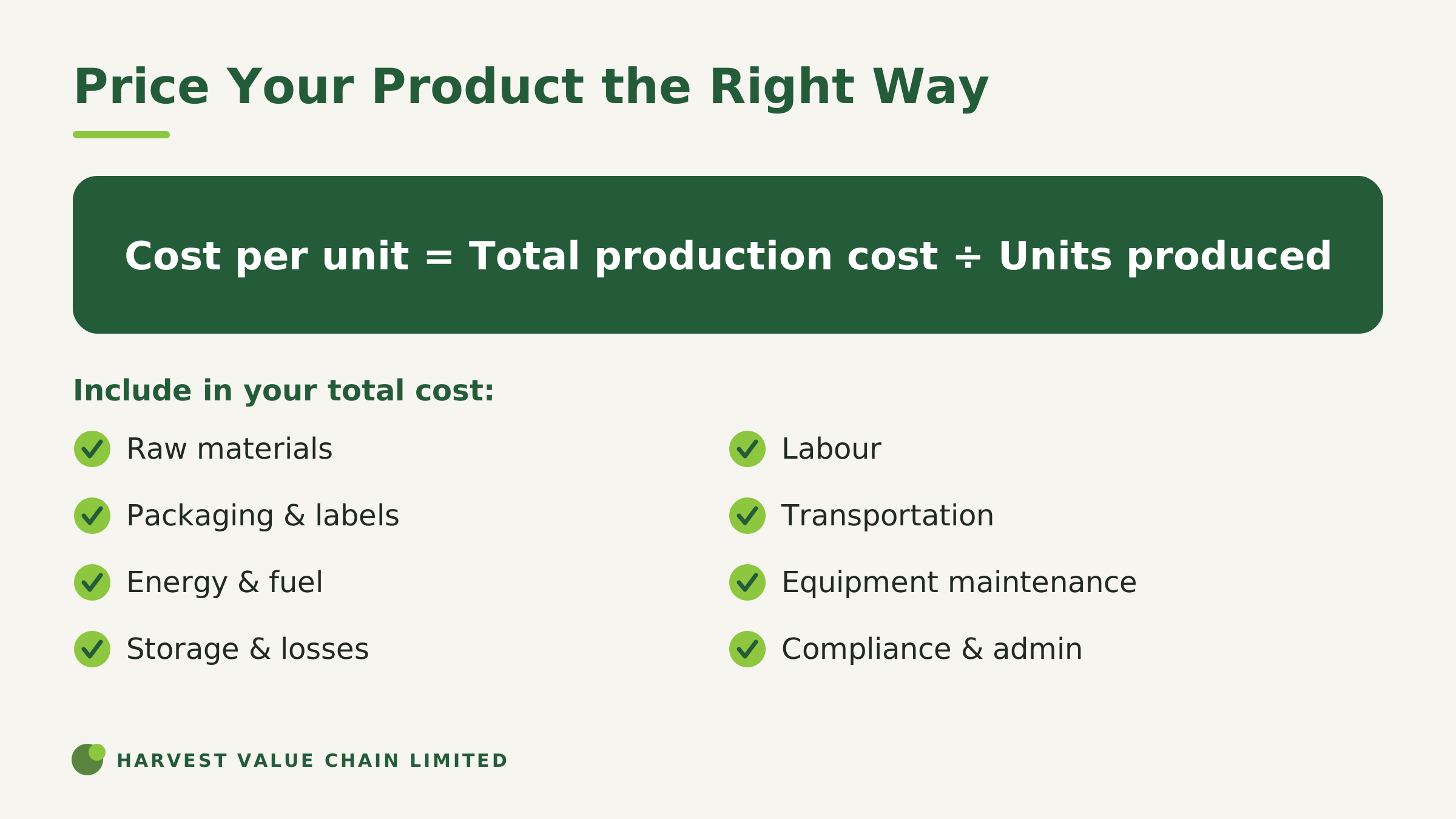
However, if transportation, energy, equipment maintenance, storage and other operating expenses are excluded, the selling price may not generate the expected profit. For example, if a food processor spends money purchasing ingredients, packaging the finished product and transporting it to customers, all these expenses should be reflected in the product’s total cost.
There is also a difference between revenue and profit. Receiving money from customers does not automatically mean that the business has made a profit.
What can entrepreneurs do?
Every food processing business should have a simple but reliable system for recording income and expenses. Entrepreneurs should calculate the total cost of production, determine the cost per unit and review their selling prices regularly.
They should also separate business funds from personal spending. This makes it easier to understand how much the business actually earns and how much is required to keep it running.
Building a More Sustainable Food Processing Business
Running a successful food processing business is not only about producing quality products or attracting more customers. It is also about understanding the expenses involved in getting products from raw materials to the final consumer.
The cost of transportation, energy, packaging, storage, equipment maintenance and regulatory compliance may not always be obvious, but they all influence business performance. Food entrepreneurs who understand these expenses are better positioned to make informed decisions, manage their resources and prepare for expansion.
A business does not become sustainable simply because it sells more products. It becomes sustainable when its production, operating costs, pricing and revenue are properly managed.
At Harvest Value Chain Limited, we believe that building a stronger agricultural sector goes beyond production. It also involves equipping businesses with the knowledge, resources and connections needed to create value at every stage of the food value chain.
For food processors and agribusiness owners, the next step towards growth may not always be producing more. Sometimes, it begins with understanding where the money goes.
Beyond Farming. Building Value Across the Chain.
Don’t forget to join our FoodConvo Series 3 themed ” Retail-Ready Roadmap:How to get your product from market to supermarket shelves “. Register here: https://foodflow.eo.page/ns3qf