Imagine developing a food product that customers love. You have invested time, money and effort into sourcing your raw materials, processing them and ensuring that the final product meets your quality expectations. Your product is selling within your immediate community and you are beginning to think about expanding into bigger markets.
Naturally, supermarkets and large retail outlets become part of that ambition.
However, moving from selling within local markets to supplying established retail outlets is not always straightforward. A product that performs well at a local market may require several improvements before it can meet the expectations of formal retail buyers.
For many small and medium-scale food businesses, this transition can be challenging. Issues such as regulatory approval, product labelling, packaging, branding, consistency and distribution can determine how far a business is able to expand.
This raises an important question: Beyond producing good food, what does it really take to make a product retail-ready?
Understanding the Retail Market
The retail food market operates with expectations that go beyond the quality and taste of a product. Supermarkets and organised retail outlets need products that meet regulatory requirements, maintain consistent quality and can be supplied reliably.
A food entrepreneur looking to enter this market must understand that product readiness involves several interconnected processes.
First, there is the issue of compliance. Food products must meet relevant food safety and regulatory standards before they can be sold through formal channels. Businesses must understand the registration processes, labelling requirements and other applicable standards for their product categories.
Second, there is product presentation. Packaging and branding influence how consumers perceive a product. A well-developed product may struggle to attract attention if its packaging does not communicate its value or provide the information customers need.
Finally, there is the ability to meet market demand. Retailers need suppliers who can deliver products consistently, maintain quality and respond to changing demand. This means that food businesses must also consider their production capacity, storage facilities and distribution arrangements.
Understanding these requirements early can help entrepreneurs prepare better and avoid costly mistakes when seeking to expand.
1. Regulatory Compliance
Food safety is an important consideration in the food industry. Consumers want to know that the products they purchase are safe for consumption, while retailers need confidence that the products they stock meet applicable regulatory requirements.
In Nigeria, the National Agency for Food and Drug Administration and Control (NAFDAC) plays an important role in regulating food products and ensuring compliance with relevant standards.
For food entrepreneurs, understanding the requirements for product registration is an important part of preparing for the retail market. Depending on the nature of the product, this may involve appropriate registration, product information, labelling and compliance with applicable manufacturing and food safety requirements.
Labelling is particularly important because it provides consumers with essential information about what they are buying. Product labels may include ingredients, nutritional information where applicable, production and expiry dates, storage instructions and manufacturer details.
However, regulatory compliance should not be treated as something businesses consider only when they are ready to enter supermarkets. It should form part of product development and business planning from the beginning.
When businesses understand the standards expected of them, they are better positioned to build consumer confidence and explore wider market opportunities.
2. Branding and Packaging
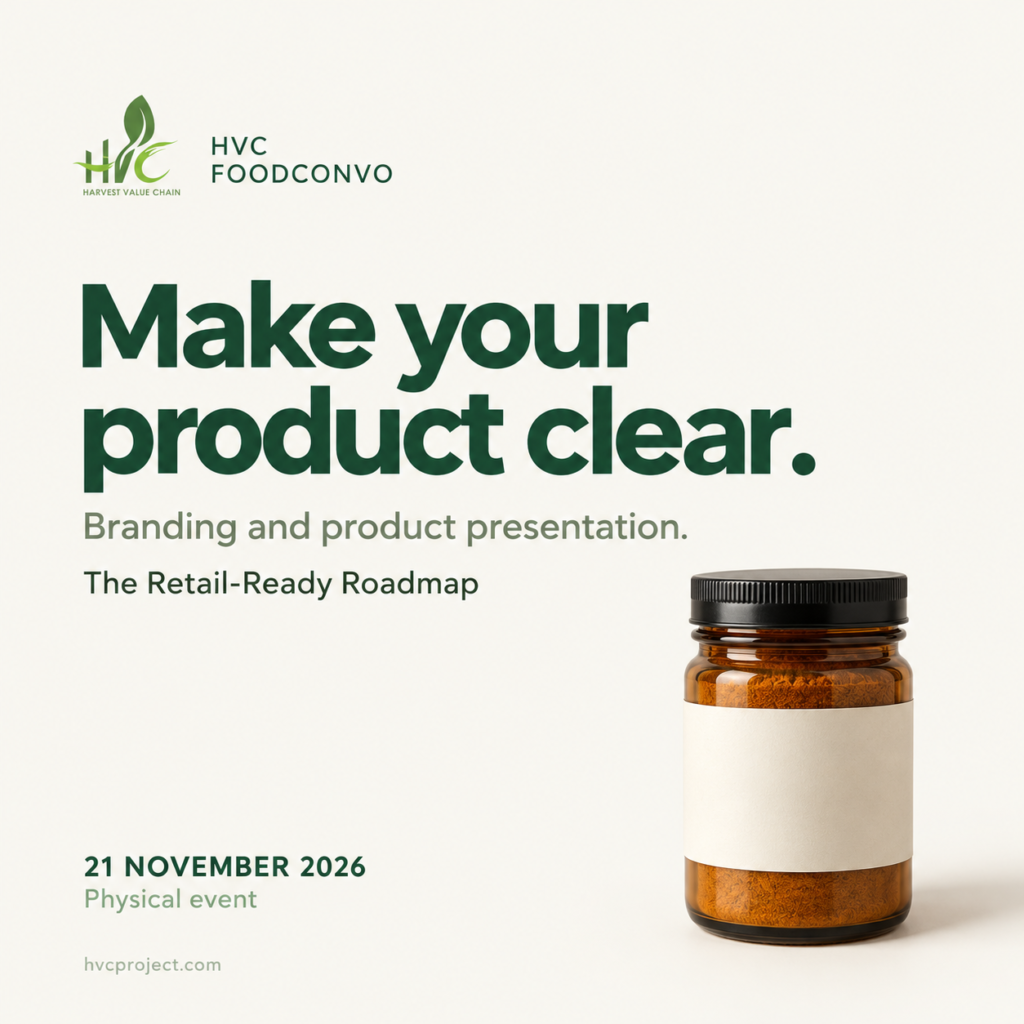
Walk into a supermarket and observe the products on the shelves. Before customers pick up a product, they often notice its packaging, colours, brand name and overall presentation.
This makes branding and packaging important parts of a food business’s market strategy.
Packaging serves several purposes. It protects the product, provides relevant information and helps communicate the identity of the business. Depending on the product, appropriate packaging can also improve shelf life, ease of transportation and storage.
Branding, on the other hand, helps customers recognise and distinguish one product from another. A consistent brand identity can make a product more recognisable and help establish a relationship with consumers.
For small-scale food businesses, developing attractive packaging does not necessarily mean spending beyond their financial capacity. The goal should be to find packaging solutions that are suitable for the product, meet relevant requirements and communicate its value effectively.
Entrepreneurs should consider the following when developing their product packaging:
- Product suitability: Does the packaging protect the product and maintain its quality?
- Labelling: Does it provide the necessary product information?
- Visual appeal: Can customers easily recognise the product and its brand?
- Practicality: Is it convenient to transport, store and display?
- Cost: Can the business afford the packaging while maintaining reasonable production costs?
These considerations can help food businesses make better packaging decisions as they prepare to reach new customers.
3. Consistency and Production Capacity
Getting a product onto supermarket shelves is an achievement, but maintaining its presence is another challenge.
Retailers need suppliers who can meet agreed delivery schedules and maintain consistent product quality. A business that cannot fulfil orders regularly may find it difficult to sustain its relationship with retail outlets.
This is particularly important for small-scale processors who may still depend on seasonal raw materials, limited processing equipment or manual production methods.
Before approaching supermarkets, entrepreneurs should assess their production capacity and determine whether they can meet potential demand without compromising quality.
They should also consider raw material availability, processing efficiency, storage conditions, transportation and inventory management.
Planning for these factors can help businesses avoid situations where increased demand becomes difficult to manage.
4. Understanding the Customer and the Market
A product may be well processed, properly packaged and compliant with regulatory requirements, but it must still meet the needs of its intended customers.
Understanding the target market is therefore essential.
Food entrepreneurs need to consider who their customers are, what they value, how much they are willing to pay and where they prefer to purchase their products.
Market research can provide useful information about consumer preferences, competing products and pricing. It can also help businesses identify opportunities to improve existing products or introduce new ones.
For example, consumer preferences for convenient packaging, different product sizes and affordable options may influence how a business develops and presents its products.
The ability to understand these preferences can help food businesses make informed decisions rather than relying entirely on assumptions.
Moving from Farm-Gate to Supermarket Shelf
The journey from production to formal retail markets requires more than a good product. It involves understanding the different stages of the value chain and recognising how each stage contributes to the final product reaching consumers.
Farmers and raw material suppliers play an important role in ensuring the availability of quality inputs. Processors transform these materials into products, while packaging, regulatory compliance, branding, storage and distribution help prepare them for the market.
When these activities are properly coordinated, businesses have a better opportunity to create value, reach more consumers and build sustainable operations.
However, many food entrepreneurs still lack access to the information, technical guidance and industry connections needed to navigate these processes successfully.
This is why conversations around market readiness are important.
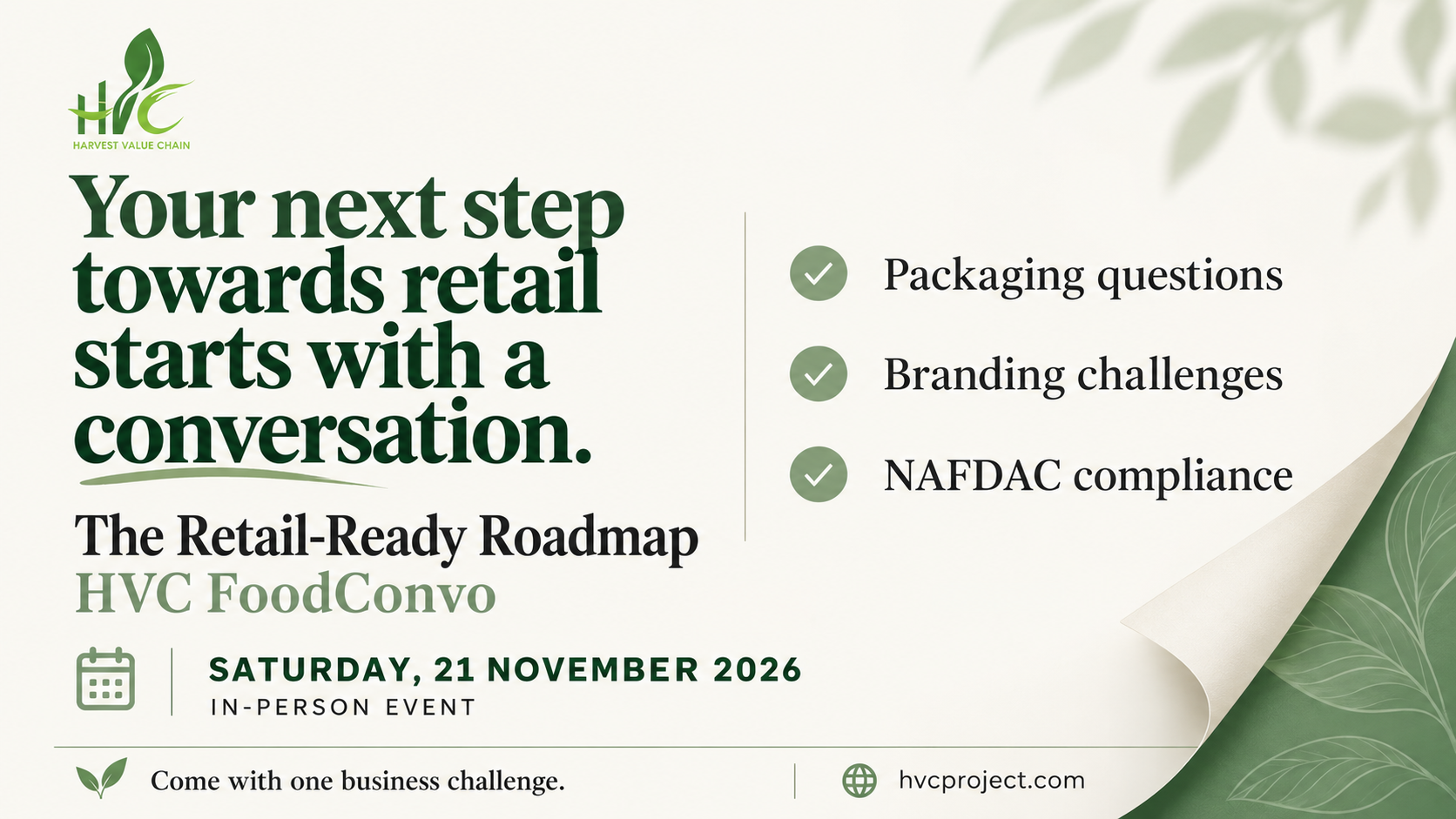
FoodConvo Series 3: The Retail-Ready Roadmap
At Harvest Value Chain Limited, we recognise that supporting food businesses goes beyond encouraging production. It also involves helping entrepreneurs understand the processes, standards and market opportunities that can support their growth.
This is the idea behind the third edition of our FoodConvo series.
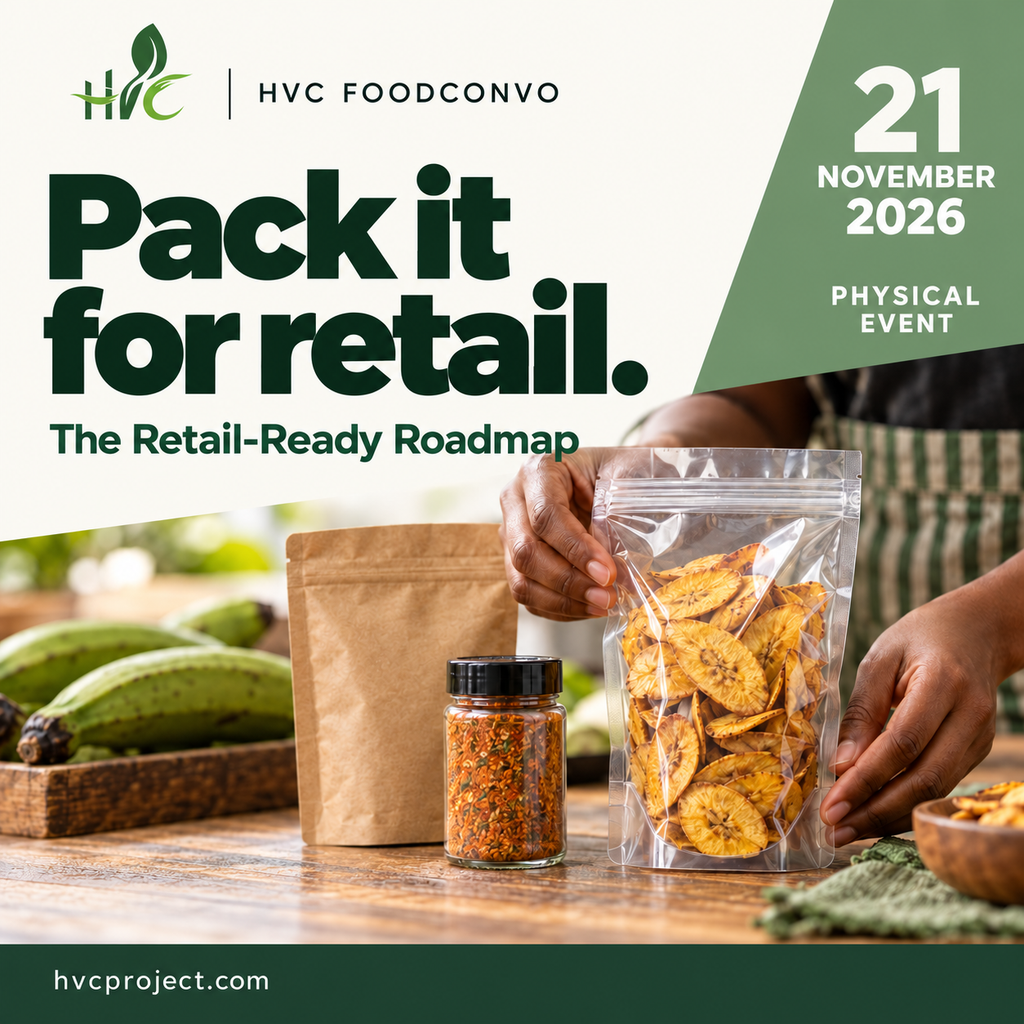
Under the theme The Retail-Ready Roadmap: From Farm-Gate to Supermarket Shelf, FoodConvo Series 3 will bring together industry perspectives to explore what food businesses need to know when preparing their products for formal retail markets.
The conversation will focus on two important areas:
Regulatory Compliance and NAFDAC Registration
Participants will gain insights into regulatory expectations, product registration and the importance of meeting relevant standards when preparing food products for the market. This session will be delivered by a representative from NAFDAC.
Branding and Packaging for Retail Readiness
The discussion will be handled by a seasoned expert who has been in the business for years. The session will explore how food businesses can improve their product presentation, develop effective branding and make packaging decisions that support their entry into formal retail channels.
Beyond the presentations, participants will have the opportunity to ask questions, exchange experiences and engage with practical perspectives from the industry.
Who Should Be Part of This Conversation?
FoodConvo Series 3 is particularly relevant to:
- Small and medium-scale food processors.
- Food entrepreneurs and agribusiness owners.
- Start-ups developing packaged food products.
- Farmers interested in moving further along the agricultural value chain.
- Business owners looking to supply supermarkets and other formal retail outlets.
- Individuals interested in food processing, branding and market development.
Whether you are developing your first packaged product or already operating a food business, understanding retail readiness can help you identify areas that need improvement and prepare for new market opportunities.
Join Us at FoodConvo Series 3!
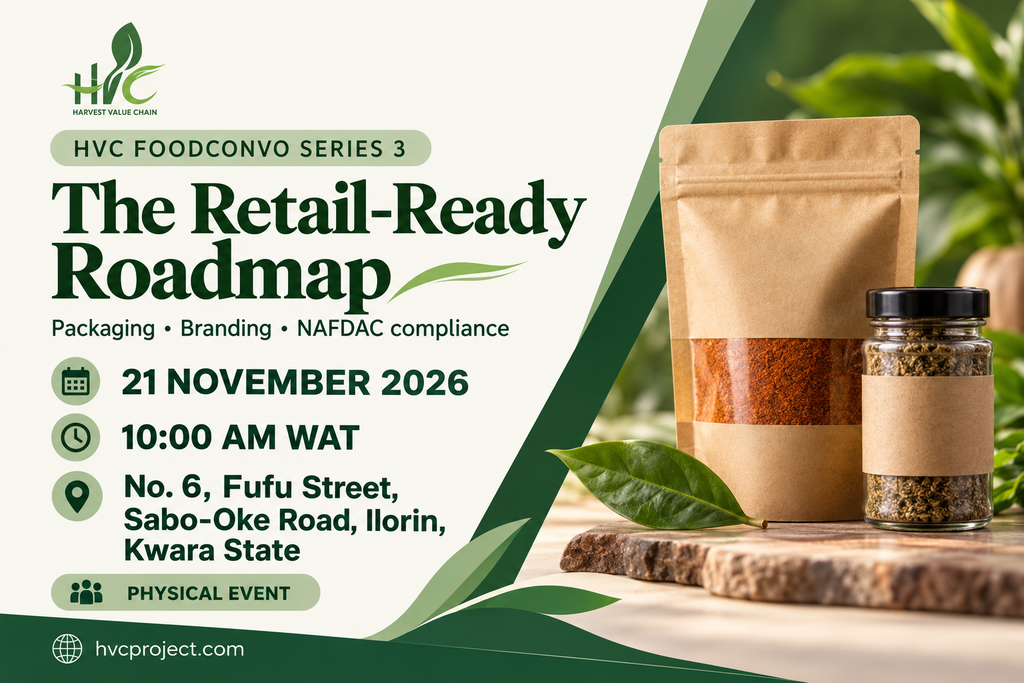
Theme: The Retail-Ready Roadmap: From Farm-Gate to Supermarket Shelf
Date: Saturday, 21 November 2026
Time: 10:00 AM WAT
Venue: No 6, Fufu Street, Sabo-Oke Road, Ilorin, Kwara State.
At Harvest Value Chain Limited, we believe that creating a stronger food system requires more than increasing production. It requires building connections, sharing knowledge and supporting businesses across the value chain.
FoodConvo provides an opportunity to have these important conversations and learn from people with relevant industry experience.
Join us as we explore practical ways to prepare food products for the retail market.
Because producing good food is only part of the journey. Getting it ready for the market is where the next opportunity begins.
REGISTER FOR THE EVENT HERE: https://foodflow.eo.page/ns3qf